Gold or Silver Jewelry?

Ethan Sullivan
| 20-10-2026
 · Lifestyle Team
Hi, readers. You walk into a store, see the same necklace in yellow gold and in silver, and suddenly you're stuck.
Both look good under the display lights. But the one you take home has to look good on you, on a Tuesday morning, with whatever you actually wear.
Start with your skin undertone
Most people sort into warm, cool, or neutral undertones, and that decides more than personal taste does. Check the veins on your inner wrist in daylight. If they read green, you lean warm, and yellow gold tends to sit well against your skin. If they read blue or purple, you lean cool, and silver or white gold usually looks cleaner. Neutral undertones can wear either, which is why some people genuinely can't pick a wrong one. Warm undertones wearing silver isn't a rule against it, but the metal can look flat against your skin rather than bright.
Budget changes the metal, not the look
Here's the part people miss. Solid 14k yellow gold and sterling silver can look nearly identical in a simple chain, but the price gap is large. A basic 18-inch 14k gold chain often runs $150 to $400 depending on weight, while a comparable sterling silver chain sits closer to $30 to $80. If you want the gold look without the gold price, gold vermeil, which is a thick layer of gold over sterling silver, gives you the tone for a fraction of the cost. Just know that plating wears down over years of daily wear, usually at the points where the piece rubs against your skin.
Match the metal to how you wear it
Everyday pieces take more punishment than occasion pieces, and the metal should reflect that. Sterling silver tarnishes when it reacts with sulfur in the air, so a ring you never take off will need polishing every few weeks. Solid gold doesn't tarnish, which is why a 14k gold band can sit on your hand for years with nothing but a rinse. If you're hard on your jewelry, think about that maintenance gap before you fall for a cheaper piece. It's the real cost.
Mixing metals is fine now
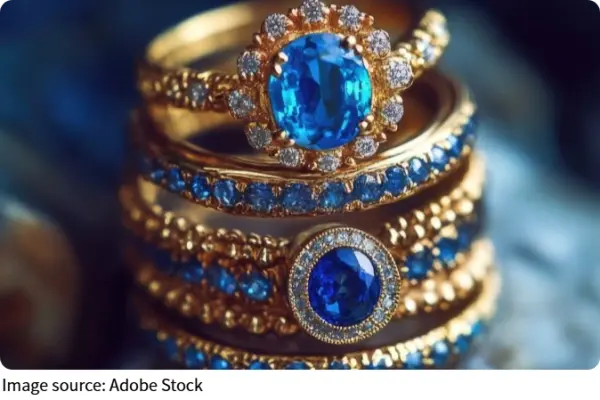
The old rule about never mixing gold and silver has mostly faded. You'll see it done well in stacked rings, where a thin silver band sits next to a yellow gold one on the same finger. The trick is to repeat each metal at least twice across your outfit, so the mix reads as intentional rather than accidental. A silver necklace with gold earrings alone can look like a mistake. Add a gold bracelet or a silver ring and it starts to look deliberate.
Think about what you already own
Before you buy, open your jewelry box and look at the dominant tone. If most of your pieces are silver, a new gold necklace may end up sitting in the drawer because nothing else matches it. Buying into the metal you already wear most is the practical move. If you genuinely want to switch, do it slowly, one piece at a time, so your collection stays wearable as it shifts.
The short version: check your undertone first, then your budget, then how often the piece will leave the box. Get those three lined up and the choice stops being hard. Next time you're standing at that display case, look at your wrist before you look at the price tag.