Tiger Camouflage Secrets
Ravish Kumar
| 20-10-2026
 · Animal Team
At first glance, a tiger’s orange coat and bold black stripes seem almost impossible to miss. Yet in the right setting, that striking pattern can make the animal surprisingly difficult to notice.
The secret lies in how its colors and markings interact with vegetation, shadows, sunlight, and distance. Rather than simply matching a single background, a tiger’s coat helps break up its overall shape and makes it harder to distinguish it from its surroundings.
Why Tigers Have Stripes
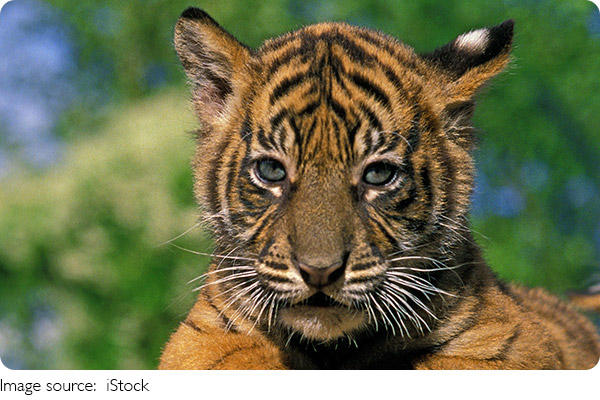
A tiger’s stripes do more than create its familiar appearance. They form a pattern that can visually break up the body's outline, especially when the animal moves through vegetation.
In forests and areas with tall plants, sunlight often passes through leaves in irregular patches. This creates a mixture of light and shadow across the ground. A tiger’s alternating stripes can blend with those changing patterns, making its body less obvious from a distance.
Every tiger has a distinctive stripe pattern, much like an individual visual signature. These markings are also useful to researchers who identify individual tigers in photographs and camera-trap images.
Orange Does Not Mean Easy to Spot
One of the most interesting aspects of tiger camouflage is its orange coloring. To human eyes, orange can appear highly noticeable against green vegetation. However, the way different animals see color is not always the same.
Many animals that share a tiger’s environment have different types of color vision from humans. Because of this, the orange coat may not stand out to them as strongly as it does to people. This helps explain why a tiger can look brightly colored in a photograph while appearing much less obvious among plants and shadows. Color perception plays an important role in how camouflage works.
Light and Shadow Change Everything
Camouflage is not only about color. Lighting plays a major role too. A tiger moving through a forest may pass through bright patches, shade, tall grass, and leaf-covered areas. Its stripes can interrupt the smooth outline of its body as the surrounding light changes.
This type of pattern is sometimes called disruptive coloration. Instead of making an animal look exactly like its background, it helps make the animal's shape harder to recognize. That effect becomes particularly useful when a tiger remains still among vegetation. A person may scan an area and see only shadows and leaves before realizing that a tiger is nearby.
Camouflage Works in Different Habitats
Tigers live across a variety of environments, and their coats can interact with those surroundings in different ways. Forests provide dappled light and dense vegetation, while grasslands contain tall plants that can interrupt the view of a moving animal.
Wetland environments create another combination of vegetation, reflections, shadows, and earthy colors. In colder habitats, tigers can have thicker coats and somewhat different coloring that fits their surroundings. The important point is that camouflage does not require a tiger to disappear completely. Even reducing the clarity of its outline can make it harder to notice.
Movement Matters as Much as Color
A tiger's camouflage becomes more effective when combined with careful movement. Remaining still can make the striped pattern blend into vegetation, while slow movement can prevent sudden changes from drawing attention. The animal's coat is therefore only one part of its ability to remain difficult to spot. Its behavior, surroundings, lighting, and distance all influence how visible it appears.
This also explains why seeing a tiger in the wild can be such a surprising experience. A large animal may be relatively close while remaining hidden among plants and shadows.
The tiger's camouflage is a combination of color, stripes, lighting, surroundings, and behavior. Its coat does not need to make the animal invisible. Instead, it helps break up its shape and reduces how easily the eye can pick it out from a complicated background.
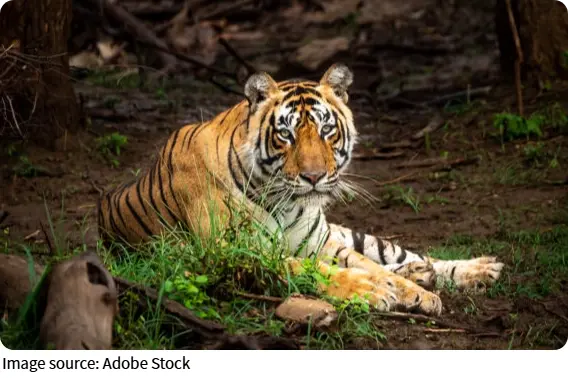
What looks like a bold and noticeable pattern to people can serve a very different purpose in nature. Among grass, leaves, shadows, and changing light, those famous stripes become an elegant example of how closely an animal can be adapted to its environment.