Lily Self-Cleaning

Nolan O'Connor
| 25-03-2026
 · Nature Team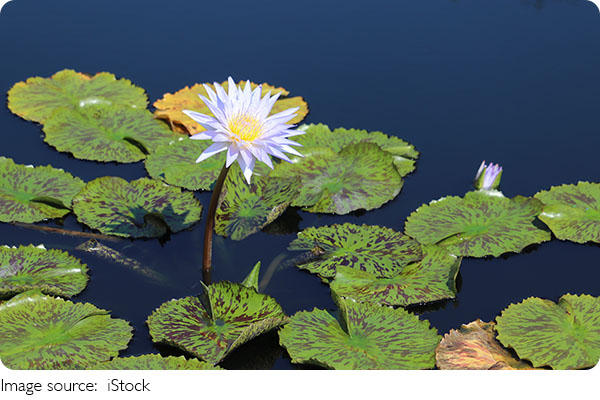
Have you ever seen a water lily leaf glistening after rain, completely free of dirt or water spots? It's not just luck or careful pond maintenance—water lilies have a natural self-cleaning system.
Their leaves and structure are engineered to shed debris and excess water, keeping the plant healthy and photosynthesis efficient. Understanding this process reveals how nature solves problems in surprisingly elegant ways.
Leaf Surface Design for Self-Cleaning
Water lilies rely on the unique texture of their leaves to stay clean. Their surfaces are coated with a waxy layer and covered with microscopic bumps, creating a slippery interface.
1. Hydrophobic coating – The wax repels water, so droplets bead up rather than spreading across the leaf. This prevents prolonged water contact that could encourage fungal growth.
2. Microstructures – Tiny protrusions on the leaf surface reduce adhesion, letting dust and dirt particles roll off with water droplets.
3. Minimal surface friction – The combination of wax and bumps ensures that debris slides off easily, even with gentle water movement.
Actionable tip: If you maintain a small pond, adding floating water lilies can naturally reduce leaf debris. Their surfaces keep water cleaner by shedding particles before they settle.
Leaf Shape and Orientation Aid Drainage
The shape and positioning of water lily leaves are crucial to draining water efficiently. Broad, flat leaves float on the surface, and their edges are slightly raised or curved.
1. Curved edges – Water naturally rolls toward the center or off the sides, preventing pooling.
2. Floating arrangement – Leaves adjust their angle in response to sunlight, which also helps excess water flow off smoothly.
3. Overlapping leaves – In dense clusters, leaves create channels that guide water away from the plant's crown, protecting delicate stems.
Example: In a pond during heavy rainfall, water lily leaves may carry several small droplets that quickly slide off their curved edges. This prevents excess weight and avoids stagnation on the leaf surface, which could block sunlight.
Natural Cleaning Through Movement
Water lilies are not static. Slight movements caused by wind or water currents enhance cleaning. Even minor vibrations dislodge dirt and tiny particles.
1. Gentle swaying – Floating leaves move with surface ripples, shaking off debris.
2. Droplet rolling – Water droplets pick up dirt as they roll along the leaf surface, effectively “washing” the leaf.
3. Seasonal shedding – Older or damaged leaves naturally fall off, removing accumulated grime and making room for fresh, clean leaves.
Actionable step: In artificial ponds, introducing small water currents or gentle aeration can mimic these natural movements, keeping lilies and other floating plants cleaner.
How Roots Support Self-Cleaning?
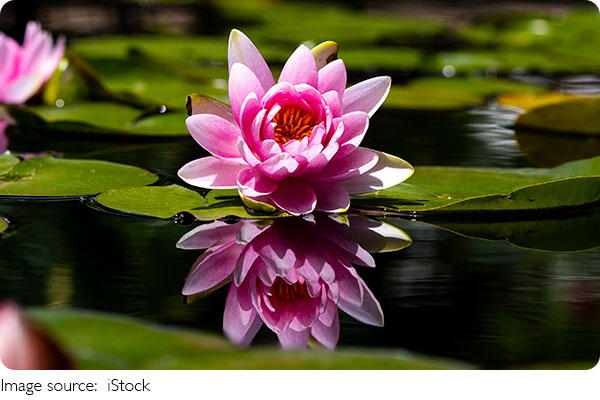
While leaves handle most debris, roots play a subtle but important role. Water lilies anchor themselves in the soil while allowing nutrients to flow efficiently. Healthy root systems support leaf function and maintain proper water levels around the plant.
Tips for supporting root efficiency:
1. Avoid overcompacting soil – Loose sediment allows roots to absorb nutrients and stabilize the plant.
2. Regularly check for obstructions – Remove twigs or leaves that might block water flow around roots.
3. Plant at appropriate depths – Too deep or too shallow placement can affect water circulation and leaf cleanliness.
Example: In garden ponds, ensuring that water lilies are planted in nutrient-rich, well-drained soil helps leaves float freely and maintain their self-cleaning properties.
Lessons from Water Lilies
Water lilies show us that natural systems often combine multiple strategies—surface design, shape, movement, and root health—to maintain cleanliness and efficiency. Their self-cleaning mechanism inspires sustainable design in human engineering, from water-repellent coatings to natural drainage systems.
Actionable idea: Observe water lilies in your pond or local garden. Notice how debris rarely lingers on leaves. By replicating their natural principles—hydrophobic surfaces, gentle water movement, and proper placement—you can keep your own water features cleaner with minimal effort.
Water lilies aren't just beautiful—they're tiny engineers. Through surface chemistry, leaf shape, and natural movement, they manage to stay clean, healthy, and functional. Studying their self-cleaning methods reminds us that sometimes the simplest solutions are the ones nature has already perfected.