Grey crowned crane

Santosh Jha
| 05-01-2026
 · Animal Team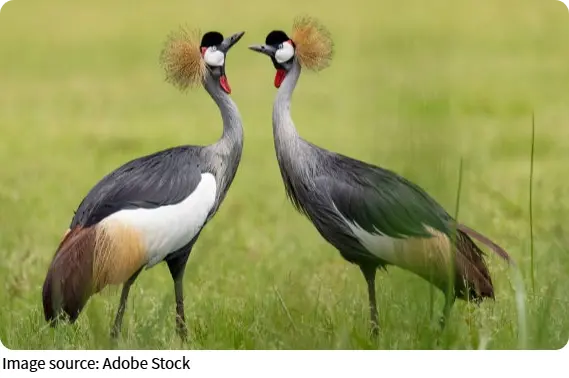
The Grey Crowned Crane is one of those birds you can't help but admire.
With its distinct golden crown, long legs, and striking appearance, it's easy to see why this bird stands out among others.
Native to sub-Saharan Africa, the Grey Crowned Crane is not only a marvel in appearance but also boasts fascinating behaviors and a strong ecological role in its habitat. But beyond its beauty, there's much more to learn about this iconic crane.
Physical Characteristics of the Grey Crowned Crane
One of the most eye-catching features of the Grey Crowned Crane is its golden crown, made up of stiff golden feathers. This crown isn't just for show—it's part of the bird's mating display and helps attract mates. Along with its distinctive crown, the crane's overall appearance is elegant and regal, making it a symbol of grace.
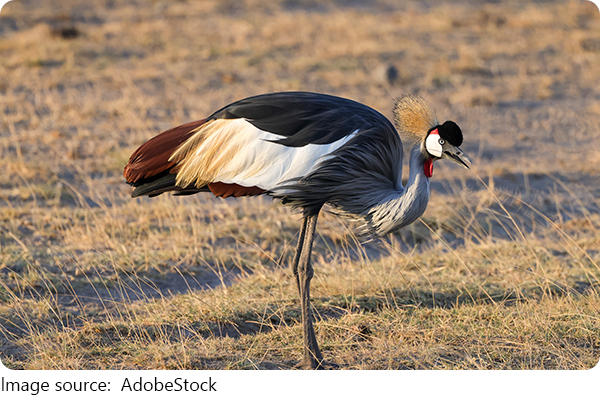
Golden Crown – The bird's crown is formed by a cluster of golden feathers, which are actually stiffened to stand upright, creating a halo-like effect.
Coloration – The body of the crane is mostly grey with a white underside and black wing tips, giving it a sleek and refined look.
Long Legs and Neck – Like many cranes, the Grey Crowned Crane has long, slender legs and a graceful neck, perfect for wading in shallow water or tall grasses.
These physical traits make the Grey Crowned Crane instantly recognizable, adding to its allure among birdwatchers and nature enthusiasts alike.
Habitat and Distribution
The Grey Crowned Crane is native to sub-Saharan Africa, particularly found in countries like Uganda, Kenya, and South Africa. They prefer open grasslands, wetlands, and savannas, areas where they can find plenty of food and nesting spots. The birds are often seen near wetlands, as they thrive in areas where there is access to shallow water, providing them with the food they need.
Grasslands and Wetlands – These birds prefer environments with tall grasses and access to water, where they can forage for food and hide from predators.
Migration Patterns – Though they are not long-distance migrators, some populations may move to find better food sources during seasonal changes.
Nesting Areas – Grey Crowned Cranes build their nests in tall grasses, reeds, or occasionally on floating vegetation, where they can keep their eggs and chicks safe from predators.
They are primarily found in eastern and southern Africa, although they are adaptable enough to live in a variety of wetland ecosystems. Their habitat is crucial for their survival, as it provides both food and protection.
Diet and Feeding Habits
Grey Crowned Cranes are omnivores, feeding on a diverse diet of plant and animal matter. They can be found foraging in wetlands, where they look for small aquatic animals like insects, worms, and even small fish. They also feed on seeds, tubers, and other vegetation, making their diet highly varied depending on availability.
Insects – These birds are often seen foraging for insects, especially beetles and grasshoppers, which make up a significant part of their diet.
Vegetation – Cranes also feed on seeds, roots, and leaves, often bending down to forage for plants in the tall grasses.
Small Fish – Occasionally, they will hunt small fish or amphibians, especially in areas with abundant water.
The birds are opportunistic feeders, meaning that they will eat whatever is available in their environment. They are well-adapted to forage both on land and in water, making them versatile in their feeding habits.
Breeding and Family Life
The Grey Crowned Crane forms strong monogamous pairs, often staying with the same mate for life. They are known for their elaborate courtship dances, which are part of their mating rituals. During this display, the crane puffs out its golden crown and dances to impress the female.
Mating Rituals – Courtship displays involve dancing, bowing, and synchronizing movements to attract a mate. These displays are not only a way of showing off, but also help establish pair bonds.
Nesting and Egg Laying – Grey Crowned Cranes build large nests on the ground in tall grass or wetlands. The female typically lays two eggs, which both parents take turns incubating.
Raising the Young – Once hatched, the chicks are cared for by both parents, who feed and protect them. The young cranes are precocial, meaning they can walk and swim shortly after birth.
This family structure helps ensure the survival of the young, as both parents are involved in nurturing and protecting them. The care provided by both the male and female is critical to the development of the chicks.
Conservation Status
The Grey Crowned Crane is currently listed as "Endangered" by the International Union for Conservation of Nature (IUCN), primarily due to habitat loss and the degradation of wetlands. They are also affected by hunting and the pet trade. The destruction of wetlands for agricultural use and urbanization poses a significant threat to their habitat.
Habitat Loss – The conversion of wetlands for agriculture and human settlement has led to a loss of nesting and foraging sites.
Poaching – Cranes are sometimes hunted for their striking feathers or captured for the illegal pet trade.
Climate Change – Changing weather patterns are affecting the availability of suitable wetland habitats, further threatening their populations.
Efforts are being made to conserve the Grey Crowned Crane, including protecting wetlands and implementing stricter regulations against hunting and trapping. These efforts are critical to preventing further declines in their numbers.
Grey Crowned Cranes are a symbol of beauty and grace, but they also face significant threats from human activities. By understanding more about their behaviors, habitats, and conservation challenges, we can help ensure these stunning birds continue to thrive in their natural environments for generations to come.